Years ago, in seminary I took a required pastoral care class. An assignment for the
class was to pick a location and once a week for the semester visit the location and provide pastoral care. We were also to keep a journal of what we did and what we learned. I chose a nearby senior assisted living facility. I think it was Presbyterian affiliated.
I met with the chaplain of the facility. She gave me a list of names of residents to visit.
Each week I was to check in with her.
I clearly remember one visit. The resident was a small woman in her 80s. She was in
good health and pleased to greet me. As I sat down in a chair, I placed my clip board on
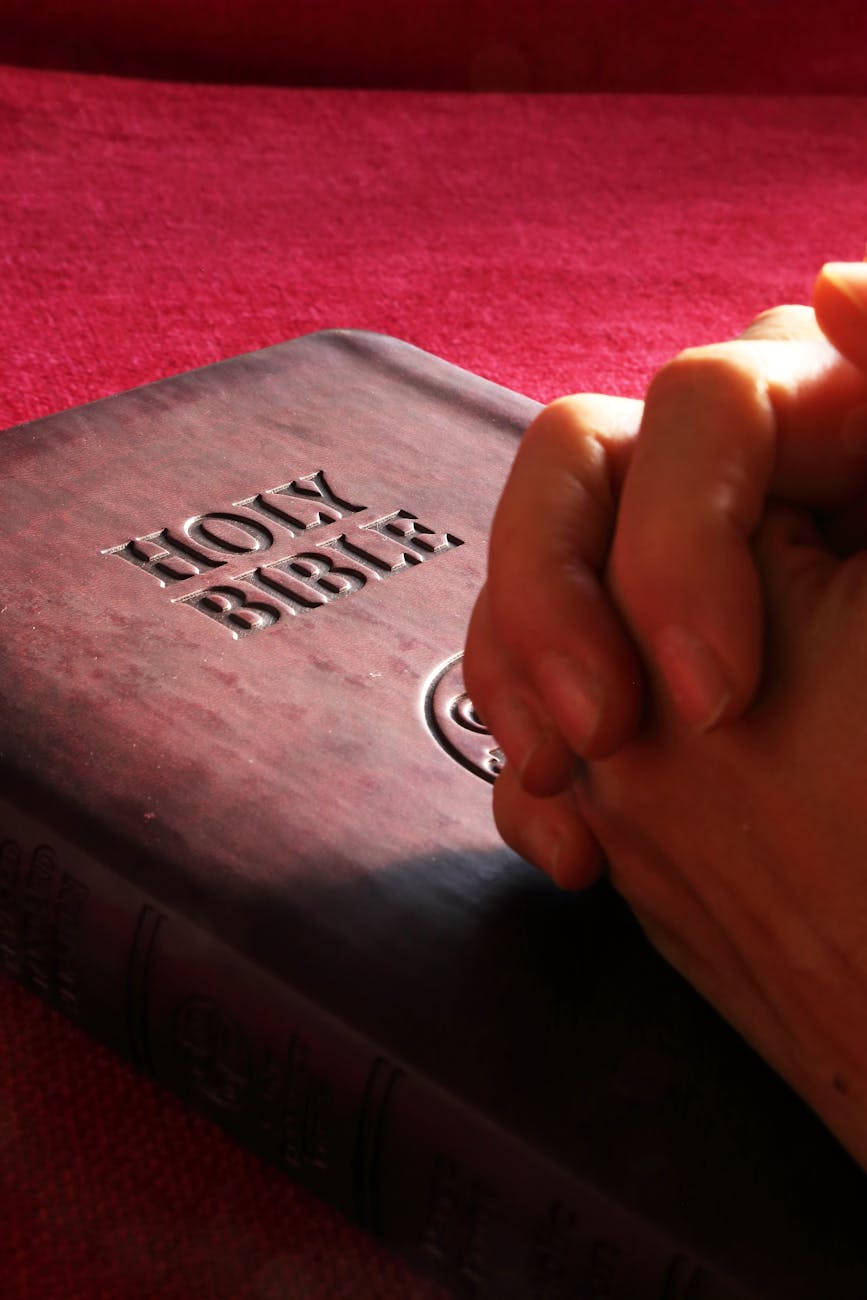
the coffee table in front of me and I introduced myself. She immediately and very politely said, “Could you please move your clip board. You’ve covered up my Bible. I grew up never putting anything over my Bible.” I quickly moved the clip board and apologized for not seeing her Bible. A pleasant visit went on from there.
I remember that visit because it continues to remind me of the special place the Bible
can hold in people’s lives. Even its physical presence can have a special holy significance. And it makes me wonder how the Bible can be significant.
The program staff of 1st Church are currently reading and discussing the book; The
Rise and Fall of the Bible by Timothy Beal. This interesting book argues that though
Bible publishing is big business and new translations flood the market, people are actually reading the Bible less. People like to have a particular translation of the Bible to fit their religious and political world view (conservative New American Standard Bible or
progressive New Revised Standard Version). They are familiar with a verse here or there cited in a particular progressive or conservative discussion. But they are not reading the Bible for themselves and wrestling with all the complexity of interpretation that is part of the Bible. And they don’t want to be introduced to interpretations that may challenge or expand their world view. So as a consequence, more and more people may have multiple Bibles, but they really don’t know the Bible.
Dr. Crooks recently wrote citing an article in the April 2025 Christian Century
entitled “What is the Bible for?” In the article various pastors, theologians, and authors give 7 words or less responses to the question. Some of the responses are: “Awakening us to the call of God,” “Stirring us to believe in costly love,” “Window into God, mirror to the
soul.” To those I would add my own: “A curious library of experiences with God.”
The commandment in the Bible is clear: “You shall not make for yourself an idol…” (Exodus 20:4; Deuteronomy 5:8). Human beings tend to worship the idols they make. And human beings tend to try to control their idols. The command directs us to only worship who is really God. And the commandment states the freedom of God. Despite the commandment people still make idols: rain, a statue, a powerful person, money. And I
wonder if the Bible has become an idol for some.
I am comfortable with our Reformed/Presbyterian theology of the Bible which swirls
around the idea of “inspiration.” “Inspiration” means God was active in the process of the
Bible being written. And God is active in the process of reading and studying the Bible.
And God is active in the teaching and preaching of the Bible. “Inspiration” upholds the
special place and history of the Bible and the changing interpretations of the Bible in the
changing contexts of life. A “literal” belief in the Bible tends to make it an idol.
“Inspiration” instead points us beyond the Bible to the living God.
So, what is the Bible? How might you answer the question in 7 words or less? And in the
meantime Bill and I will continue to teach and preach from the Bible according to
“inspiration” in a time when people really know less and less about it.
Trusting “Inspiration,”
Glenn
P.S. If you are interested in questions about the Bible I would recommend the Timothy
Beal book mentioned above, or a book by Rob Bell, What is the Bible? Both books are
very readable for anyone.





Leave a comment